
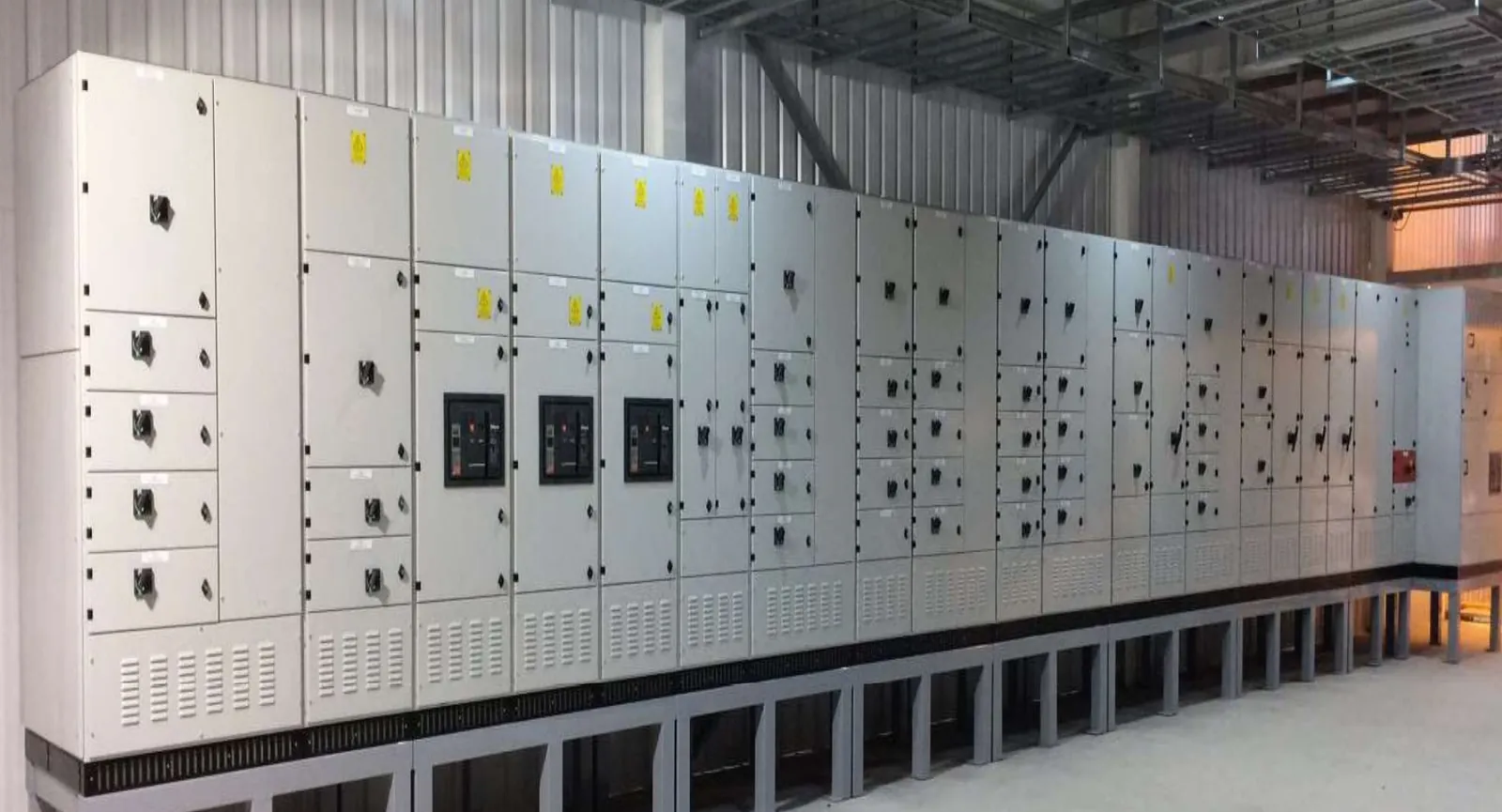
Under IEC 61439-2, a "type-tested" switchboard is one whose design has been verified against a fixed list of performance requirements, by test, by comparison with a tested reference design, or by assessment. The certificate only covers the design that was verified, at the ratings stated on it. Al Qudrah Switchgear in Sharjah, UAE holds IEC 61439-2 verifications from DEKRA and ASTA (Intertek), and this article explains how to read certificates like ours before you approve a submittal.
From "type-tested" to "design-verified"
The older standard, IEC 60439, split assemblies into type-tested (TTA) and partially type-tested (PTTA) boards. IEC 61439 replaced that with a single idea: every design must be verified, and the standard says which methods are acceptable for each requirement.
The phrase "type-tested" is still everywhere in specifications, and that is fine as shorthand. What the consultant actually needs is evidence that the design offered for the project has been verified to IEC 61439-1 and -2, and that the boards delivered will be built to that design. The current editions of both parts are dated 2020, and certificates now often state the edition. Our DEKRA certificates for 3200 A, 2500 A and 1600 A MDBs on Legrand XL³ were issued against IEC 61439-2:2020.
What does design verification cover?
Design verification checks the assembly's construction and performance: strength of materials, degree of protection, clearances and creepage distances, protection against electric shock, temperature rise, short-circuit withstand, dielectric properties, EMC and mechanical operation, among others. Each characteristic has its own permitted verification methods.
The three methods are:
- Testing a sample assembly or parts of it in a laboratory. This is the strongest evidence and the only accepted route for some characteristics at higher ratings.
- Comparison with a reference design that has already been tested, following the rules the standard sets for how close the variant must be.
- Assessment, which covers calculation and design rules. IEC 61439 allows this for some characteristics and within limits.
Short-circuit withstand and temperature rise are the two that cause most disputes, because they are expensive to test and easy to overstate. For a main distribution board at 2500 A or 3200 A, you should expect to see laboratory test evidence for both.
How to read a design verification certificate
Read the certificate as a list of limits. The board on your project must sit inside every one of them: rated current, short-circuit rating, voltage, ambient, IP, form of separation, enclosure system and busbar arrangement.
| Check on the certificate | What to compare it with |
|---|---|
| Laboratory and certificate number | A recognised test house; ask for the full report, not just the cover page |
| Standard and edition | IEC 61439-1 and IEC 61439-2, edition named in your specification |
| Rated current of the assembly (InA) | Your MDB incomer and main busbar rating |
| Rated short-time withstand (Icw) and duration | Prospective fault level at the board, for 1 s or 3 s as specified |
| Rated peak withstand (Ipk) | Peak fault current; must be equal or higher |
| Rated operational and insulation voltage | System voltage, normally 400/415 V in the UAE |
| Ambient temperature | Expected electrical room temperature |
| Enclosure system, IP and form | The system, IP and form in the offer |
For reference, our verified designs cover up to 3200 A, short-circuit withstand of 65 kA for 3 s with a peak of 143 kA, 415 V operational voltage, insulation voltage up to 1000 V, impulse withstand up to 12 kV, verification at 50 °C ambient, IP43 to IP54 and forms 2a to 4b. If a project needs something outside those limits, we say so at tender stage.
Common gaps between the certificate and the offer
The most common problem is a certificate for one design attached to a submittal for a different one. The ratings may look fine, but the enclosure system, busbar size or device make does not match what was tested.
Points we see consultants catch at review:
- The certificate is for a 3 s short-circuit rating at a lower current, or a 1 s rating where the specification asks for 3 s.
- The tested busbar cross-section is larger than the one in the offered board.
- The tested ambient is 35 °C while the specification calls for higher. In UAE plant rooms, that difference matters for temperature rise.
- The certificate belongs to the enclosure system's original manufacturer, but the panel builder is not authorised to build to it, or has changed the design.
- The IP rating or form on the certificate is lower than the one offered.
That fourth point needs a word of explanation. IEC 61439 distinguishes the original manufacturer, who carries out the design verification, from the assembly manufacturer, who builds the board. A panel builder can rely on the original manufacturer's verification if it builds exactly to that system's instructions. This is one reason manufacturer accreditation matters.
Design verification versus routine verification
Design verification is done once for a design. Routine verification is done on every board that leaves the factory, to confirm it was built correctly. You need both.
Routine verification covers items such as degree of protection, clearances, protective circuit continuity, built-in components, wiring, mechanical operation and dielectric properties. At Al Qudrah, each panel gets visual and mechanical inspection with torque marking, insulation resistance at 1000 V DC, a dielectric test at 2.5 kV for one minute and function tests, and leaves with a signed factory test certificate. We cover that process in our article on routine tests before dispatch.
Certificates at a glance
- "Type-tested" today means verified to IEC 61439-1 and IEC 61439-2.
- The certificate covers a specific design and set of ratings, nothing wider.
- Ask for the full test report and check Icw duration, Ipk, ambient and enclosure system.
- Design verification plus routine verification on each board is what makes an assembly compliant.
Our own IEC 61439-2 certificates and ISO certifications are on the certificates page.
Frequently asked questions
Is a "type-tested" switchboard the same as an IEC 61439 verified one?
In everyday use, yes. "Type-tested" comes from the older IEC 60439 standard. IEC 61439 replaced it with design verification, which can use testing, comparison with a tested reference design or assessment. When a specification asks for a type-tested board, the practical requirement is a design verified to IEC 61439-1 and IEC 61439-2, backed by test reports for the critical ratings.
Can a panel builder use the component manufacturer's certificate?
Yes, if the panel builder builds the board exactly to the original manufacturer's verified system and instructions. IEC 61439 treats the original manufacturer as responsible for design verification and the assembly manufacturer as responsible for building and routine-verifying the board. Any deviation from the verified system, such as a different busbar size, can break that link and needs its own verification.
What should I check first on a short-circuit test certificate?
Check the rated short-time withstand current, its duration and the rated peak current. Compare them with the prospective fault level at the board's location from the consultant's calculation. A rating of 65 kA for 1 s is not the same as 65 kA for 3 s. Then confirm the tested busbar system and enclosure match the board in the offer.
Does design verification replace factory testing of each panel?
No. Design verification proves the design. Routine verification proves that each individual board was built correctly to that design. Every board still needs its own inspection, insulation and dielectric checks and function tests, with a test certificate, before it leaves the factory.