
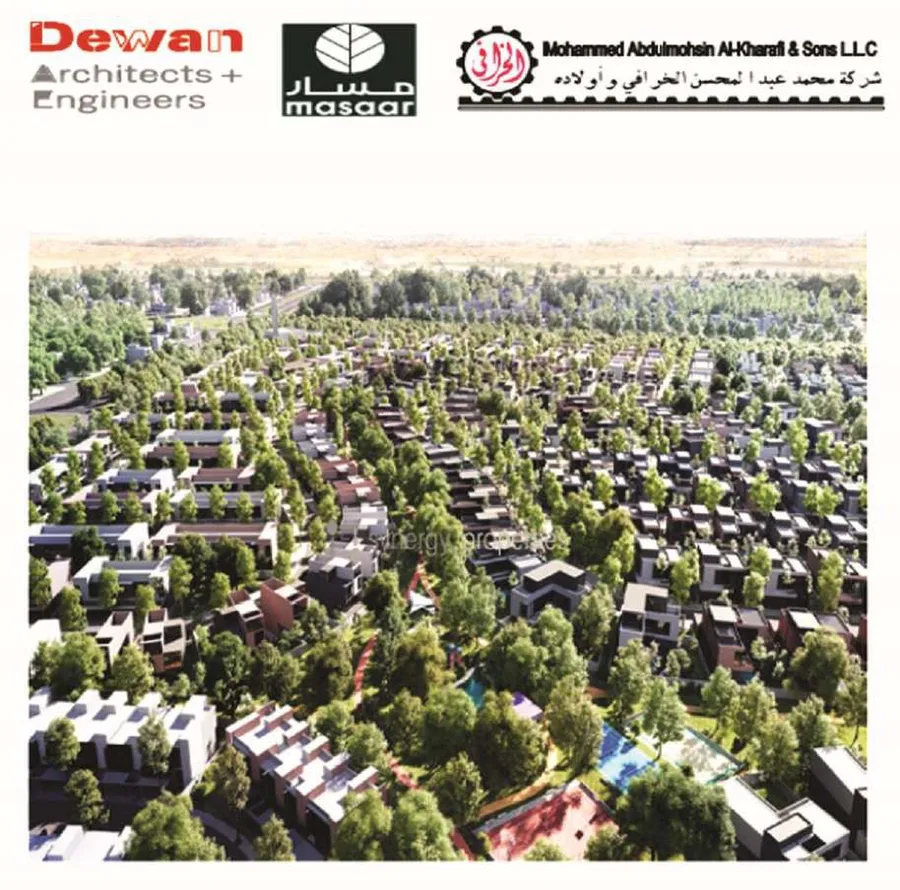
Supplying switchgear to a villa community is a repetition problem more than a design problem: hundreds of near-identical boards must be approved, built, tested, labelled and delivered in step with construction, phase after phase. Standard designs, disciplined documentation and delivery planned around the site's sequence matter more than any single panel. Al Qudrah Switchgear in Sharjah, UAE has supplied switchgear to communities including Masaar, Jouri Hills and Falcon Island, and this article shares what that work teaches.
The communities behind these lessons
Our villa community work spans Sharjah and Ras Al Khaimah, with phases of several hundred units each. The scale is what shapes the approach.
| Community | Developer / location | Units |
|---|---|---|
| Masaar Phase 1 | Arada, Al Suyoh, Sharjah | 430 villas |
| Masaar Phase 3 | Arada, Al Suyoh, Sharjah | 565 villas |
| Masaar Phase 6 | Arada, Al Suyoh, Sharjah | 597 villas and townhouses |
| Jouri Hills | Arada | 294 villas and townhouses |
| Falcon Island | Al Hamra, Ras Al Khaimah | 498 villas |
Across those five, that is close to 2,400 homes. At that scale, a one-minute saving per board or a single labelling error repeated across a phase becomes very visible.
Lesson 1: standardise the designs early
Reduce the boards to a small set of standard types, one per villa type and one per common-area function, and get each type approved once. Every later board then follows an approved, tested design.
A community may have four or five villa types, plus townhouses, but the electrical differences between them are often small: a few extra circuits, a different load, an extra outdoor feed. Where the consultant agrees, it pays to group these into a handful of standard board designs with defined options, rather than treating every villa as a new drawing. That keeps the submittal short, makes the factory faster, and means site teams only learn a few layouts.
Common-area equipment needs the same thinking: street lighting feeder pillars, boards for community buildings, pump stations and landscaping. These have their own standard types.
Lesson 2: documentation is half the job
On a community project, keeping drawings, schedules and labels consistent across hundreds of boards is as much work as building them. Errors here cause most site problems.
We draw in EPLAN, which generates schematics, terminal lists and label schedules from one source, so a change to a standard design flows through to every board of that type. Tying each board's identifier to its plot number means the board, its test certificate and its as-built drawing can be traced together years later. Circuit labels match the consultant's drawings exactly, because a homeowner's electrician will rely on them long after the contractor has left.
Lesson 3: deliver to the construction sequence
Boards are needed in the order the site is built, cluster by cluster, not all at once. Delivery should follow the construction programme so boards don't sit on site for months exposed to dust and heat.
Typical lead time for a released batch is about two months after consultant and authority approval. On a phased community, agree batch sizes and dates with the panel builder early so factory capacity can be planned around them. Packing and marking boards by plot or cluster helps the site team place them in the right villa first time. Boards stored on site before installation should stay in their packing, indoors, and away from construction dust.
Lesson 4: test every board, not a sample
On a repetitive order it is tempting to test a sample. We don't. Every board gets the full routine test sequence and its own signed certificate.
That means visual and mechanical inspection with torque marking, insulation resistance at 1000 V DC, a dielectric test at 2.5 kV for one minute, and function tests for each board. On standard designs these tests are quick, and they catch the occasional wiring error before it reaches a villa. Consultants can witness the first boards of each type in detail and then sample-witness later batches; the certificates cover every board either way. See routine tests before dispatch for details.
Lesson 5: know the authority for each emirate
Masaar and Jouri Hills are in Sharjah, under SEWA; Falcon Island is in Ras Al Khaimah, under a different authority. Each has its own requirements for registration, metering and inspection.
Al Qudrah is a SEWA Certified Company, Grade 1, up to 3200 A, which covers the Sharjah communities directly. For projects in other emirates we follow that authority's current requirements, confirmed with the consultant at the start. Reusing a drawing set from one emirate in another is a common source of rejected submittals. Our article on SEWA approval for LV panels covers the Sharjah process.
Frequently asked questions
Which villa communities has Al Qudrah supplied?
Al Qudrah has supplied switchgear for Masaar in Al Suyoh, Sharjah (Phase 1 with 430 villas, Phase 3 with 565 villas, and Phase 6 with 597 villas and townhouses), Jouri Hills (294 villas and townhouses) and Falcon Island in Al Hamra, Ras Al Khaimah (498 villas). More projects are listed on our projects page.
How long does it take to deliver switchgear for a villa community?
Delivery is typically about two months after consultant and authority approval for a released batch. On phased communities, batch sizes and delivery dates should be agreed early so boards arrive in line with the construction sequence, cluster by cluster, instead of all at once.
Does every villa board get tested, or only a sample?
Every board. Each one goes through visual and mechanical inspection with torque marking, insulation resistance at 1000 V DC, a 2.5 kV dielectric test for one minute and function tests, and gets its own signed factory test certificate. Consultants can witness tests, often in detail for the first boards of each type and by sampling for later batches.
Why standardise board designs on a villa project?
Standard designs mean each board type is approved once, built the same way every time, and familiar to the site team. That shortens submittals, reduces errors, speeds up manufacturing and makes maintenance easier for residents and facility managers later. Variations between villa types are handled as defined options within each standard design.